

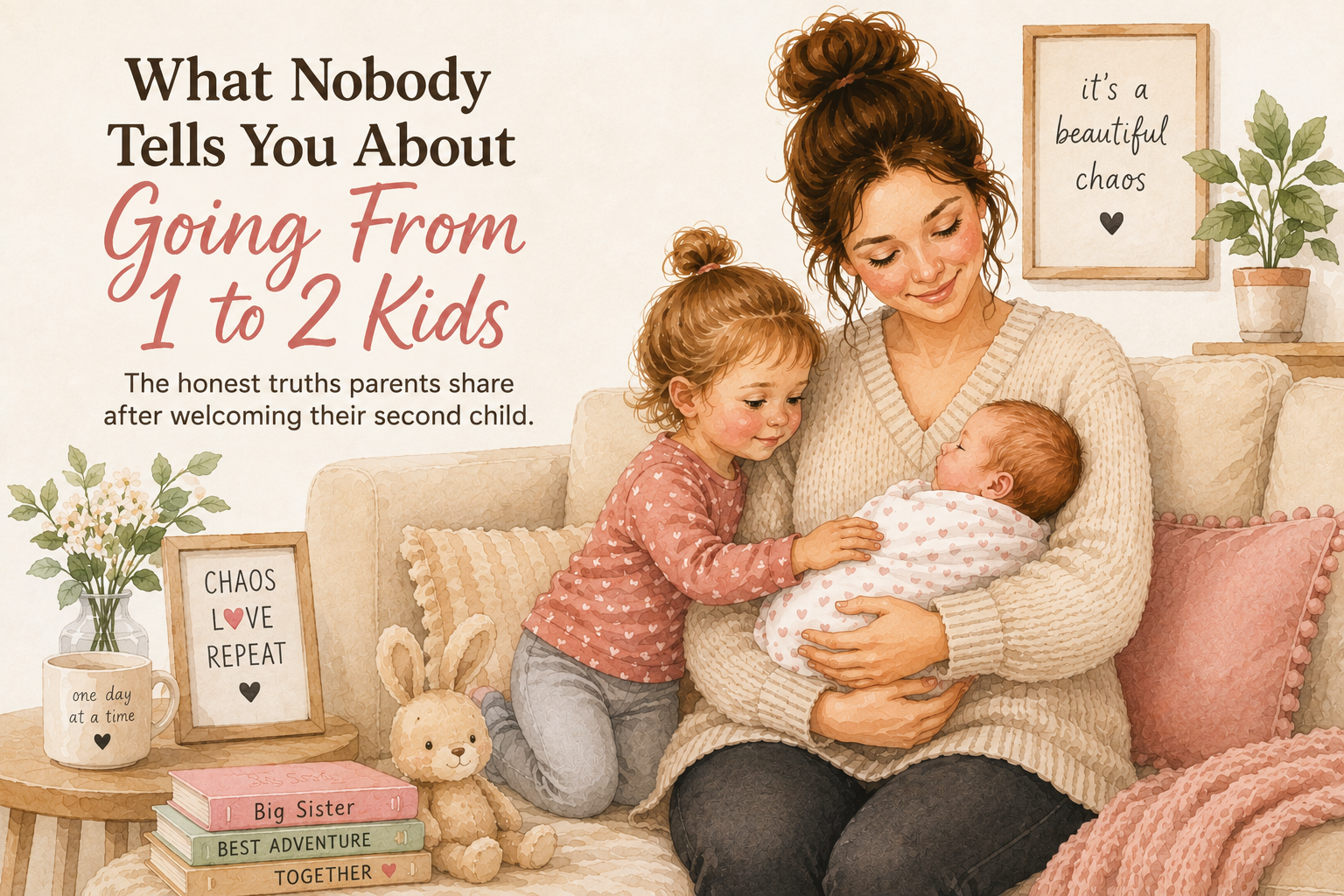
The internet is full of conflicting advice about having a second child.
Some parents will tell you that going from one child to two was the hardest transition of their lives. Others will laugh and say that nothing compares to becoming a parent for the first time.
So which one is true?
After reading hundreds of discussions from parents in online communities, one thing became clear: there is no universal answer. Every family is different, every child has their own personality, and every parent brings different strengths and challenges into the experience.
But there are a few things that parents mention again and again—things nobody really tells you before baby number two arrives.
The Baby Is Usually Easier. The Logistics Are Harder.
One of the most common things parents say is this:
“The baby wasn’t the hard part. Managing two children was.”
With your first child, everything is new. Every cough, every nap, every milestone feels like a mystery to solve. By the time your second baby arrives, you already know that babies cry, cluster feed, wake up at strange hours, and eventually settle into their own rhythm.
You trust yourself more, don’t spend hours Googling every little thing, and know that some difficult phases simply pass.
The newborn itself often feels easier.
What becomes harder is everything around the baby.
There are suddenly two schedules, two sets of emotions, two little people who need you at the exact same moment. The challenge shifts from learning how to care for a baby to learning how to divide your time, attention, and energy.
“Sleep When the Baby Sleeps” Is No Longer an Option
Every parent of two seems to laugh at one piece of classic advice:
“Sleep when the baby sleeps.”
That might work with your first child.
It definitely doesn’t work when your toddler wants snacks, playground trips, story time, and help finding their favorite stuffed animal.
Many parents describe the first months with two children as a season of survival.
The house might be messier.
Dinner could be simpler.
Laundry might wait a little longer.
And that’s okay.
Experienced parents often say that lowering your expectations during this period is one of the healthiest things you can do. Your family is adjusting to a completely new rhythm, and perfection is neither realistic nor necessary.
The Guilt About Your First Child Can Be Surprisingly Strong
One thing that catches many parents off guard is the guilt they feel toward their older child.
You remember the long cuddles, the one-on-one adventures, and the freedom to give them your complete attention.
Then suddenly, you have a newborn who needs constant care.
Many moms admit that they worry about whether their firstborn feels replaced or forgotten.
The good news?
Children are often far more resilient than we expect.
What they need most isn’t perfect balance every single day. They need reassurance that they are still loved, still important, and still part of the team.
Sometimes, ten minutes of uninterrupted attention can mean more than an entire afternoon spent together while checking your phone or feeding the baby.
Small moments matter.
Love Doesn’t Divide. It Multiplies.
Perhaps the biggest fear expectant parents have is this:
“Will I love my second child as much as my first?”
It sounds impossible until it happens.
Many parents describe the experience as one of the most surprising parts of welcoming another baby into the family. Instead of splitting their love in half, they discover that their hearts simply expand.
And then something even more magical begins to happen.
Your children start building a relationship with each other.
They make each other laugh.
They invent games.
They become partners in adventure—and sometimes partners in mischief, too.
The difficult newborn months are temporary, but the sibling bond can last a lifetime.
Preparing Your Older Child Makes a Bigger Difference Than You Think
One pattern appears over and over in parenting discussions:
Children who are included in the process often adjust more smoothly to becoming big brothers or big sisters.
That doesn’t mean there won’t be jealousy or difficult moments. Those feelings are completely normal.
But helping your child understand what to expect can make the transition less overwhelming.
Simple things can help:
- Reading books about becoming an older sibling
- Talking about how babies grow and what they need
- Letting your child help with small tasks
- Creating special one-on-one moments after the baby arrives
- Reminding them that their role in the family is important and valued
Preparing emotionally is just as important as preparing the nursery.
Sometimes, a little understanding can turn fear into excitement.
So… Is Going From One Child to Two Hard?
The honest answer?
Yes.
And no.
It’s hard in ways that are completely different from becoming a parent for the first time.
With your first child, you learn how to become a mother or father.
With your second child, you learn how to become a family with more moving pieces, more love, more noise, and more beautiful chaos.
The early days may feel overwhelming.
But countless parents say the same thing:
One day, you’ll watch your children laugh together, help one another, or share a secret only siblings understand—and you’ll know that every difficult moment was only a season.
Leave a Reply